

Natural gas vehicles: Italy’s earliest and Iran’s fastest
Jun 09,2015
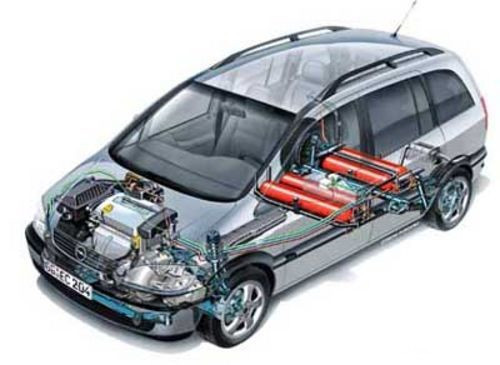
(1) Overview of global natural gas vehicle development and application
Since the advent of the world's first CNG vehicle in 1931, after more than 60 years, the number of natural gas vehicles in the world reached 1 million by 1997. Since then, natural gas vehicles have entered a period of rapid development. According to statistics from the International Association of Natural Gas Vehicles (IANGV), the global number of natural gas vehicles and filling stations reached 11.356 million vehicles (exceeding 10 million vehicles for the first time) and 16,513 seats in 2009; in 2012, it reached 16.733 million vehicles and 21,292 seats, respectively. In 2009, they increased by 47.3% and 28.9%, with average annual growth rates of 13.8% and 8.8% respectively. In 2103, the total number of natural gas vehicles in the world increased to 18.09 million, of which the top ten countries owned 15.55 million, accounting for 86% of the global total (see Table 4 for details). According to IANGV's forecast, by 2020, there will be 65 million natural gas vehicles in the world.
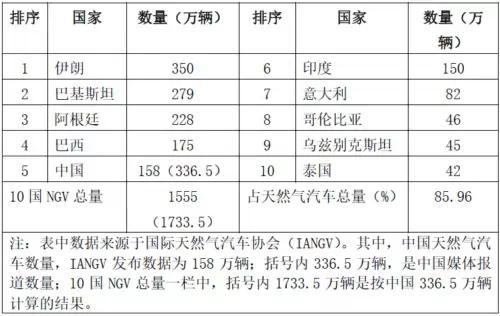
Table 4 Top 10 countries in the world in terms of number of natural gas vehicles in 2013
Note: (1) The statistical data of global natural gas vehicles are slightly different from different agencies. According to the "Natural Gas Vehicles, Gas Station Numbers and Natural Gas Consumption Statistics by Country" published in "International Petroleum Economics" in June 2013 (data source: Worldwide NGVstatistics, Gas Vehicles report〈GVR〉june 2013Vol 12〈5〉) , in 2012, the total number of natural gas vehicles in 85 countries around the world was 17,230,460, and the number of gas filling stations was 21,503, both of which were more than the number of IANGV statistics. (2) In the statistics of IANGV and GVR, there is a problem that the data statistics cutoff time of each country is different. For the statistics of 2013, most countries have data from 2012 and 2011, and a few countries have data before 2010 and from January to April 2013. data. This article mainly conducts analysis based on data released by IANGV, but the analysis of buses will use GVR data. (3) The number of natural gas vehicles in China in the table, 3.365 million in brackets, is the data provided by the article "Natural Gas Vehicles Heading to Spring" in the 2014 issue 18 of "China Petroleum and Petrochemical" magazine. The analysis below in this article mainly uses data collected by IANGV statistics.
(2) Characteristics of development and application of natural gas vehicles in the world
1. The main body of global natural gas vehicles is passenger cars. According to GVR statistics, among the global natural gas vehicles in 2012, there were 15.8751 million cars and light trucks, accounting for 92.13%; 703,900 medium and heavy buses, accounting for 4.09%; 36.88 medium and heavy trucks, accounting for 2.14%; other vehicles 282,600 vehicles, accounting for 1.64%. It can be judged from this that the main structure of global natural gas vehicles is cars, including taxis, followed by buses. Due to constraints on the number and layout of gas filling stations, there are very few long-distance buses.
2. Natural gas vehicles are mainly concentrated in developing countries. The technical level of developing countries in the field of natural gas vehicles is generally lagging behind that of developed countries, but their promotion and application are ahead. In 2013, the top 10 countries with the largest number of natural gas vehicles in the world, except for Italy, were all developing countries; the number of natural gas vehicles in these nine developing countries totaled 14.73 million, accounting for approximately 81.43% of the global total. ; In particular, the number of natural gas vehicles in the top five countries (Iran, Pakistan, Argentina, Brazil and China) reached 11.9 million, accounting for 65.78% of the global number. The total number of global vehicles is mainly concentrated in developed countries, but the total number of natural gas vehicles is mainly concentrated in developing countries. This shows that developing countries attach much greater importance to and demand for natural gas vehicles than developed countries.
3. Natural gas vehicles are developing fastest in Asia-Pacific and South America. The development of natural gas vehicles originated in Europe in the 1830s. The Asia-Pacific and South American regions generally entered the market from the 1960s to the 1980s. Development accelerated in the early 21st century, but they caught up from behind. Among the top 10 countries with the largest number of natural gas vehicles in the world in 2013, 6 countries in the Asia-Pacific region (Iran, Pakistan, China, India, Uzbekistan and Thailand) had a total of 10.24 million vehicles, accounting for 56.6% of the global total; 3 countries in South America ( Argentina, Brazil, and Colombia) have a total of 4.49 million vehicles, accounting for 24.8% of the world total.
4. Natural gas vehicle technology in developed countries is advanced, but their ownership is lagging behind. For example, the United States, Canada, Germany, Japan and other countries have the world's most advanced R&D and manufacturing technology for natural gas vehicles, natural gas engines and filling stations, but the number of natural gas vehicles is very small. According to IANGV statistics, in 2012, the global natural gas vehicles, gas station ownership and number of natural gas vehicles ranked 18th in the United States with 127,735 vehicles and 1,120 seats; Germany ranked 19th with 95,498 vehicles and 915 seats; Japan Canada has 42,590 vehicles and 314 seats, ranking 24th; Canada has 12,500 vehicles and 47 seats, ranking 29th.
(3) A brief analysis of foreign practices and experiences in developing and applying natural gas vehicles
Countries around the world have different approaches and processes for developing and applying natural gas vehicles, but they have two obvious characteristics: First, the development and application of natural gas vehicles are closely related to the fiscal and taxation and natural gas price incentive policies adopted by the government. Any incentive policies that are effective and consistently implemented will Natural gas vehicles will develop rapidly; if encouraging policies waver, the development of natural gas vehicles will fluctuate; if encouraging policies weaken or stop, natural gas vehicles will have difficulty in developing, or even shrink or stagnate. Second, all countries have prioritized natural gas buses and taxis for encouragement and support. The following is a brief overview of the development of natural gas vehicles in several countries and regions based on information collected and compiled from media reports to illustrate this point.
1. Italy—the first country in the world to use natural gas vehicles.
In 1931, Italy built the world's first CNG filling station and modified the world's first batch of CNG vehicles. Since then, Italy has ranked first in the world in the number of natural gas vehicles for 66 years. In 2013, the number of natural gas vehicles reached 820,000 and there were more than 900 gas filling stations, ranking seventh in the world. However, it still ranks first among developed countries in Europe and the world. The development of natural gas vehicles in Italy benefits from the preferential policies adopted by the government. For example: (1) It is stipulated that when purchasing public transportation vehicles, a certain number of natural gas vehicles must be purchased at the same time. (2) Provide financial incentives for the purchase and modification of natural gas vehicles. From 2006 to 2009, individuals and companies who purchased original natural gas vehicles were given a subsidy of 1,500 to 2,000 euros per vehicle, depending on vehicle emissions and type; from 2007 to 2009, the government allocated an annual allocation of 50 million euros, with a subsidy of 350 to 600 euros per vehicle for modified natural gas vehicles. EUR. (3) Provide 25% infrastructure investment subsidy for each CNG filling station. (4) No tariffs are levied on natural gas imports, and the value-added tax is controlled within 4%; prices are strictly regulated so that the price of natural gas is equivalent to 1/4 of the price of gasoline and 1/2 of the price of diesel. (5) In cities where single and even license plates are allowed to pass, natural gas vehicles can pass without restrictions.
2. Iran and Pakistan—the countries with the fastest development of natural gas vehicles.
(1) Iran. At the end of the 20th century, the number of natural gas vehicles in Iran was less than 1,000. In 2003, in order to save crude oil for export, the Iranian government decided to vigorously develop natural gas vehicles and formulated a development plan. Since 2004, the development of natural gas vehicles in Iran has been rapid. By 2011, the number of natural gas vehicles reached 2.859 million, an increase of more than 280 times compared with 2003, surpassing Pakistan and ranking first in the world (the number of gas stations is 1,574, ranking first in the world). No. 4). The Iranian government's approach: ① Provide fiscal and taxation policy support to promote the use of natural gas vehicles. In 2004 alone, it allocated US$2 billion to promote the development of the natural gas vehicle industry. ② Tariff reductions and exemptions for imported natural gas vehicles and parts, and subsidies for the construction of gas filling stations. The import tax for light gasoline vehicles is 100% of the CIF price, while for natural gas vehicles, the tax is 65% of the CIF price, and for imported natural gas vehicle components, the tax is 4% of the CIF price; for public CNG refueling The subsidy for each station is 1 billion riyals (approximately 107,500 US dollars), and the subsidy for each internal gas filling station is 400 million riyals (approximately 43,000 US dollars). ③Control the price of natural gas and provide financial subsidies for natural gas used by vehicles to keep the price below 50% of the gasoline price for a long time. ④Support the modification of natural gas vehicles. There are 107 refitting plants in 37 cities, and refitted natural gas vehicles accounted for 77% of the total fleet in 2006. ⑤ Vigorously carry out natural gas vehicle engineering management and technical personnel training.
(2) Pakistan. In 1980, Pakistan built its first CNG demonstration station in Karachi. Since the beginning of this century, natural gas vehicles have developed rapidly. At the end of 2008, the number of natural gas vehicles reached 2 million and the number of gas filling stations reached 2,700, ranking first in the world. The main reason for the rapid development of natural gas vehicles is that the government has formulated and implemented a series of incentive measures: ① Imported natural gas vehicles, equipment, and modified parts are all tax-free at customs; sales tax is exempted for original natural gas vehicles; ② The market price of CNG is controlled to be 35% lower than that of diesel , which is 45% lower than gasoline; ③ Accelerate and simplify the approval of gas station construction projects; ④ Support the modification of natural gas vehicles and vigorously promote the modification of fuel engines into natural gas single-fuel engines. More than 90% of its natural gas vehicles are modified vehicles.
3. The United States and Canada—countries rich in resources, advanced technology, but lagging behind in terms of storage.
(1) United States. The United States is rich in natural gas reserves, has the largest number of automobiles in the world, and leads the world in natural gas vehicle technology. The United States has world-famous natural gas engine manufacturers (such as Cummins), gas station equipment and gas cylinder manufacturers (such as Lincoln, CPI, Charter, etc.), gas metering manufacturers (such as Rosemount, etc.), and electronic equipment manufacturers (Woodward Germany, etc.) and Southwest Research Institute and other advanced scientific research and equipment manufacturing institutions in the field of natural gas vehicles. However, the United States also encourages the use of natural gas vehicles and liquefied petroleum gas vehicles (LPGV). The Clean Air Amendment Act (CAAA) promulgated in 1990 and the Energy Policy Act (EPACT) promulgated in 1992 in the United States stipulate that the federal and state government fleets must purchase new vehicles, 10% in 1993, and 30% in 1997. , in 1999, more than 75% must be alternative fuel vehicles; the federal government also provides a tax reduction of US$2,500 per vehicle for the purchase or modification of natural gas vehicles, and is exempt from the sales tax of natural gas companies. By 1998, the United States had 79,900 natural gas vehicles, 177,200 liquefied petroleum gas vehicles, and 1,247 gas stations. Natural gas vehicles ranked third in the world. However, due to various reasons such as insufficient incentive policies, natural gas vehicles developed slowly. By 2005, there were 120,400 natural gas vehicles, with an average annual growth rate of about 5%; by 2012, there were only 127,700 natural gas vehicles, an increase of only 0.52% in seven years.
(2)Canada. Canada is rich in natural gas resources and has world-renowned suppliers of natural gas engines and gas station equipment (such as IMW Industries, KRAUS, Westport Company, etc.). Canada began to promote natural gas vehicles in 1982. By 2001, there were only 20,500 natural gas vehicles and 222 gas filling stations, ranking 11th in the world. However, by 2012, the number of natural gas vehicles had dropped to 12,500, and the number of gas filling stations had dropped to 12,500. The number of stations was reduced to 47, and the world ranking dropped to 29th.
4. Russia - a country where the development of natural gas vehicles started early and had many setbacks.
Russia is rich in natural gas resources and has relatively advanced natural gas vehicle technology. However, due to fluctuations in the country's policy on the development of natural gas vehicles, the development of natural gas vehicles has experienced twists and turns. Russia's predecessor, the Soviet Union, has been using natural gas vehicles since the late 1930s, and had about 250,000 natural gas vehicles in the 1950s. However, the number of natural gas vehicles gradually decreased in the 1960s. Before 1981, the Soviet Union included the promotion of natural gas vehicles in its national development plan and actively promoted it. By 1995, the number of natural gas vehicles in Russia had increased to about 280,000 (380,000 in the CIS), ranking first in the world with Italy at that time. But then it entered a shrinking stage. By 2001, the number of natural gas vehicles was only 31,000, and the world ranking dropped to 11th. After that, it slowly recovered. In 2012, the number of natural gas vehicles was 86,000, with 250 gas stations, and the world ranking dropped to 20th.
5. South America - a region where the development of natural gas vehicles started late but is growing rapidly.
The development of natural gas vehicles in South America keeps pace with that of the Asia-Pacific region. Its main feature is abundant natural gas resources. Although it started late, the government attaches great importance to support and develops rapidly. For example: (1) Argentina: In 1997, the number of natural gas vehicles reached 401,000 and there were 531 gas stations. Since then, it has ranked first in the world for 11 consecutive years. In 2004, Congress passed a regulation to promote the use of natural gas vehicles, stipulating that government departments and public vehicles must use CNG as fuel, and encouraging the modification of natural gas vehicles. There are more than 100 CNG modification factories across the country. In 2012, the number of natural gas vehicles reached 2.14 million and there were 1,902 gas filling stations, ranking third in the world. (2) Brazil: Brazil is a country that uses ethanol gasoline throughout the country. In January 1996, the President signed a decree allowing the use of natural gas as a common fuel for automobiles nationwide. The promotion and application of natural gas vehicles accelerated. In 2005, there were more than 1 million vehicles and more than 1,000 gas stations, ranking second in the world and South America. In 2012, the number of natural gas vehicles reached 1.74 million and there were 1,701 gas filling stations, ranking fourth in the world. (3) Colombia: After entering this century, natural gas vehicle development plans for the five major cities were formulated and implemented conscientiously. They were realized on schedule. Over the past ten years, the number of natural gas vehicles has increased by an average annual rate of 37%. In 2001, there were only 12,000 natural gas vehicles and 28 gas filling stations, ranking 12th in the world. In 2012, the number of natural gas vehicles increased to 380,000 and 690 gas filling stations, ranking 9th in the world. (4) Venezuela: The country has rich oil and gas reserves. In order to increase oil exports and earn foreign exchange, the government provides 50% financial subsidies for natural gas vehicle modifications. In 1996, the country had only 20 gas stations and 1,500 natural gas vehicles, but the pace of development has accelerated significantly since entering this century. In 2012, the number of natural gas vehicles reached 185,000 and there were 166 gas filling stations, ranking 15th in the world.
6. New Zealand—a country where the development of natural gas vehicles has declined from prosperity to decline due to policy changes.
New Zealand is rich in natural gas resources. Since 1979, it has formulated policies such as financial subsidies and tax exemptions to encourage the use of natural gas vehicles. It has also formulated national technical standards for the promotion of natural gas vehicles. In 1985, the number of natural gas vehicles reached 200,000, ranking third in the world and first in the Asia-Pacific region. However, in 1986, the New Zealand government canceled the preferential policies to encourage the use of natural gas vehicles. Since then, the number of natural gas vehicles and gas filling stations has dropped sharply year by year. By 2007, there were only 283 natural gas vehicles left, and the number of gas filling stations also dropped sharply from 450 to 450. 14 seats. As a result, New Zealand has become a typical case in the world where the development of natural gas vehicles has been stagnated due to changes in government policies.
The article is excerpted from China Bus Blue Book (2014-2015)

Contact Us
Telephone:+86 25 58066912
Fax:+86 25 52897843
E-mail:sales@nj-dingri.com
Address: No. 26 Chaoyang Road, Dongping Industrial Zone, Lishui, Nanjing (211212)

Tel: 13770902509
E-mail:sales@dingrimli.com
Address: No. 26 Chaoyang Road, Dongping Industrial Zone, Lishui, Nanjing (211212)
online message